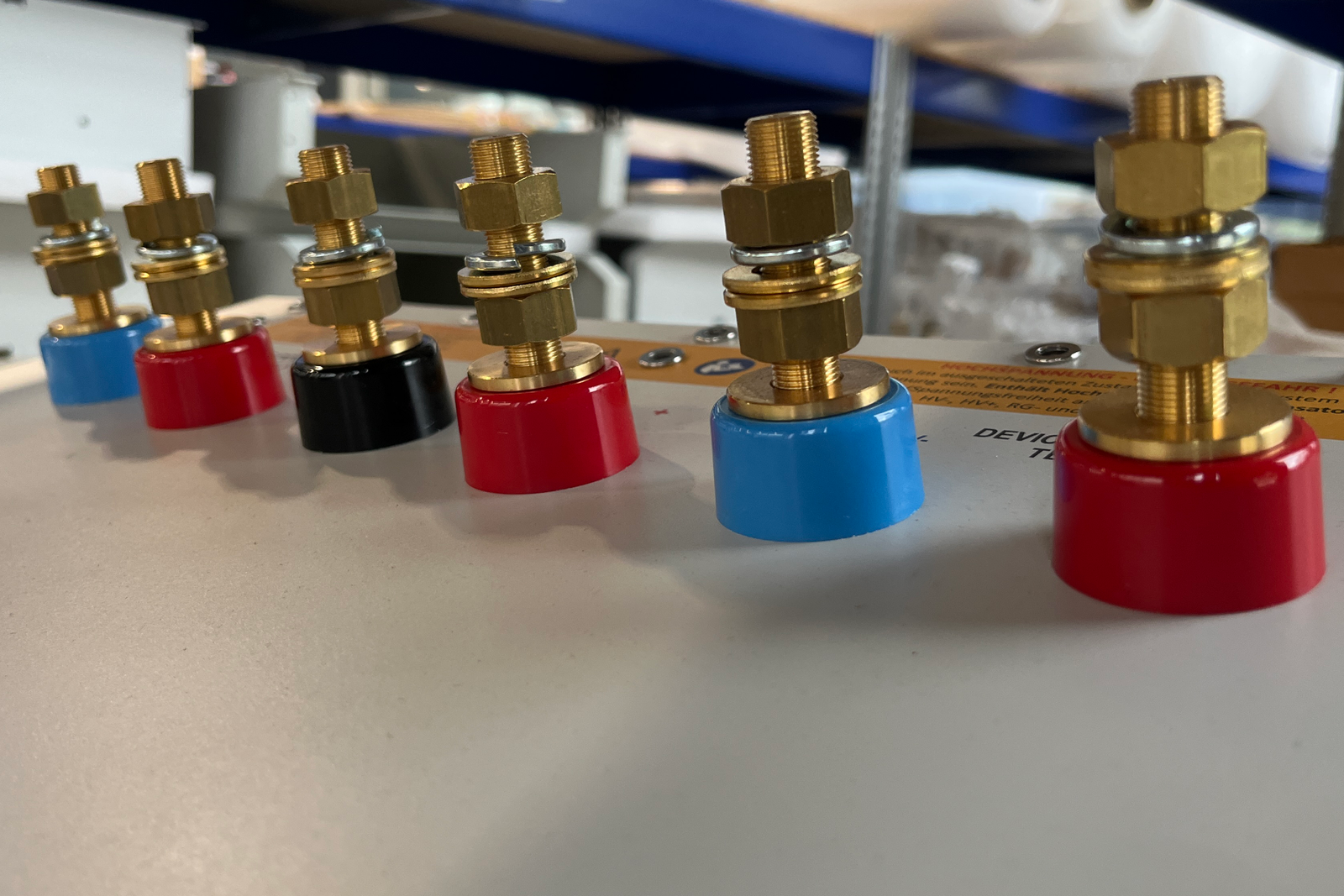
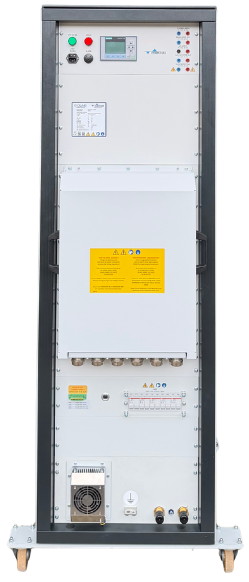
Our artifical networks, LISNs, and battery simulators offer our customers the optimal solution for developing and testing high-voltage components for electric, hybrid, and fuel cell vehicles. The impedances and frequency response comply with ISO 21498, VW 80300, MBN 11123, MBN 51123, BMW GS 95203, as well as other standards and specific customer requirements. Multiple impedances can be simulated within a single device. Upon customer request, we deliver all our HV Artifical Networks with DAkkS calibration ex works.
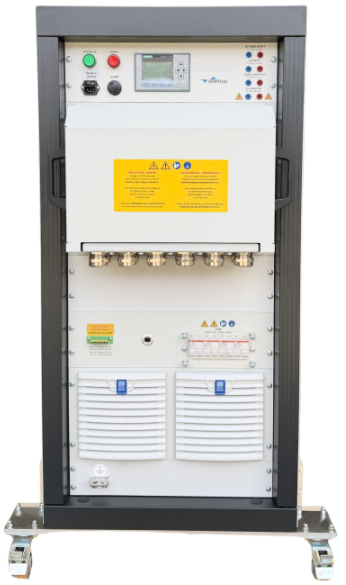
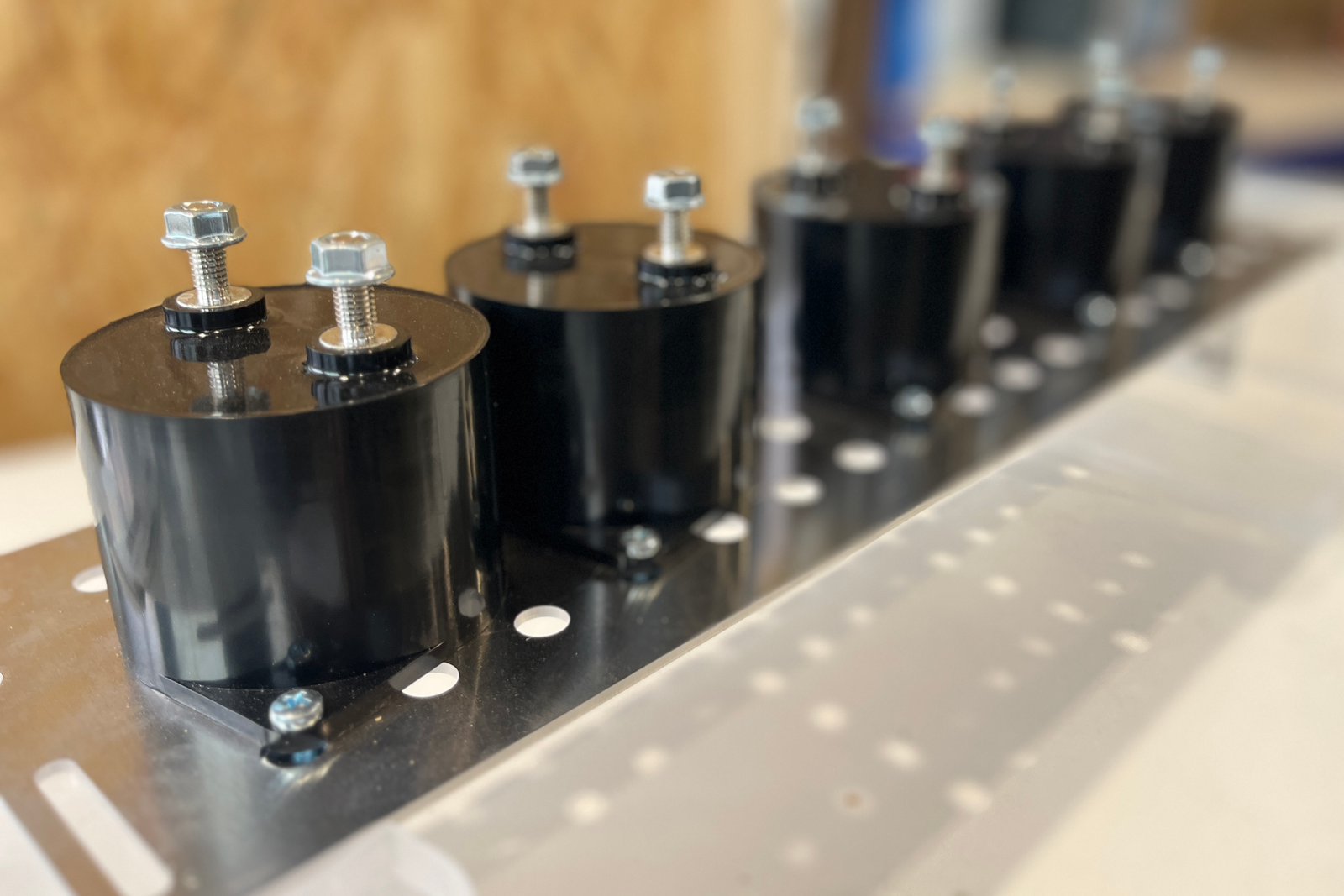
Our high-voltage capacitive coupling networks Cx are used in a wide variety of test setups in the automotive industry. These high-current capacitors are characterized by their high current-carrying capacity, operating voltage, and safety design.
Our capacitance coupling networks are used in a wide variety of test setups where high current capacitance is required.
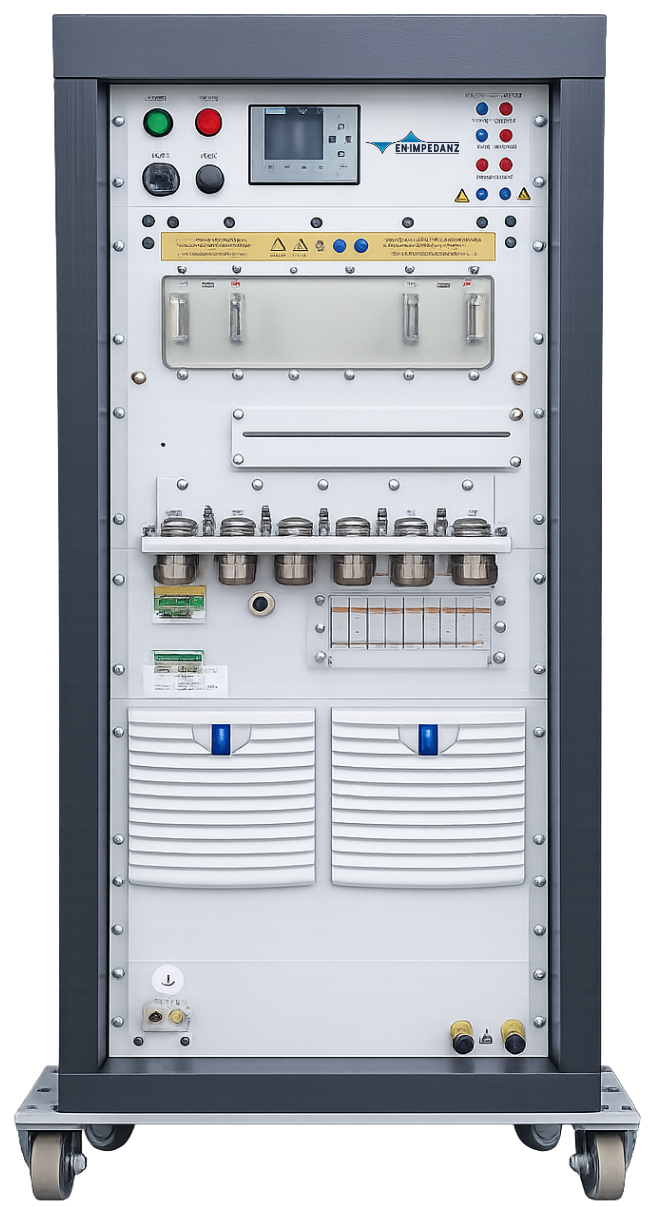
Our load dump boxes are used to test and simulate a load dump process. In accordance with ISO 21498, the high-voltage circuit is interrupted in less than 100 µs, and the voltage behavior of the high-voltage component are tested.
Our load dump box is the dedicated tool for safely performing an unplanned load dump situation.
A short circuit is the ultimate stress test for any high-voltage component. Your test subject’s ability to handle this fault quickly, safely, and reliably determines the functional safety of the entire electric vehicle.
Our High-Voltage Short Circuit Box is the dedicated tool for rigorously testing and validating the intrinsic safety of your systems.
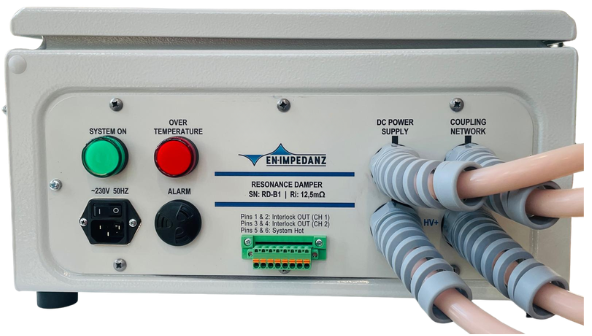
Resonance dampers are used to dampen and shift resonances within test setups. This ensures that resonances occurring between high-voltage components are damped and that the required applied disturbance signals reach the device under test.
Our resonance dampers can be integrated into both a high-voltage capacitive coupling network and a simulated vehicle electrical system, or used separately as a standalone solution.
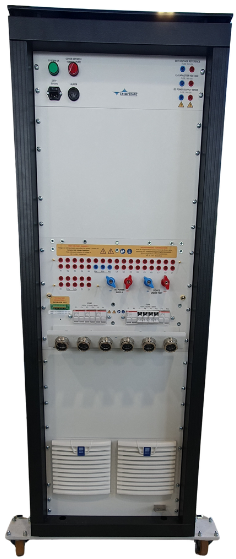
Our pre-charge simulators are used to test the functionality and robustness of pre-charge circuits in energy storage systems and high-voltage components in accordance with VW 80300 and customer specifications.
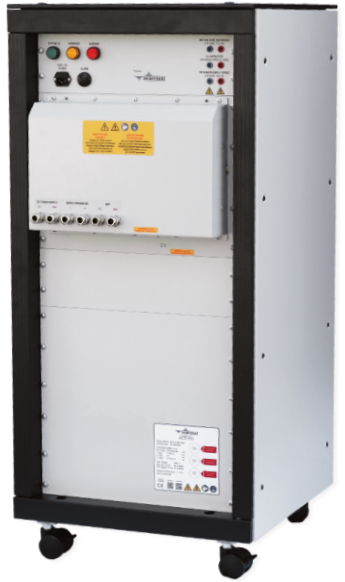
When it comes to the robustness of high-voltage components, the EHV10 requirement (load dump) is the toughest test. It simulates an extreme scenario: the sudden, unplanned disconnection of a large load in the high-voltage electrical system, which causes an explosive voltage surge (the load dump pulse).
Our EHV10-compliant test solution is essential for verifying the viability and immunity of your test subjects.
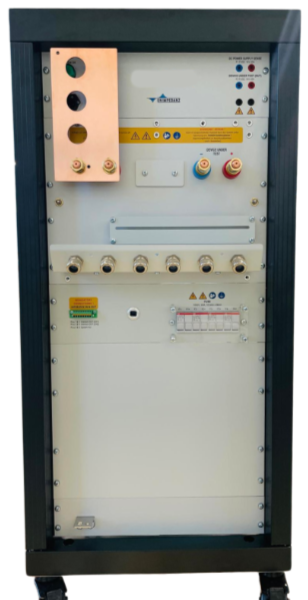
In modern electric vehicles, high-voltage components work in close conjunction with the traditional 12V electrical system.
To ensure electromagnetic compatibility (EMC) and electrical robustness in accordance with standards such as VW 80000, a clearly defined test setup is essential.
Our 12V line simulation system (AN / LISN) is an indispensable tool for simulating the real-world conditions of a vehicle's electrical system under controlled laboratory conditions.
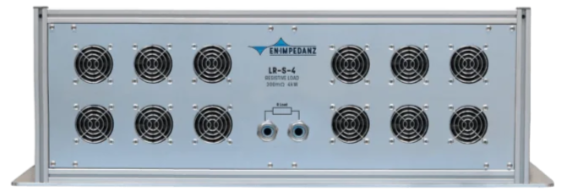
Our LR series load and test resistors are used for development, testing, and continuous operation in a wide variety of applications. Thanks to their innovative design, we offer our customers the ideal solution for applications involving high continuous currents and power levels, as well as consistent performance across a wide range of temperatures and power levels.
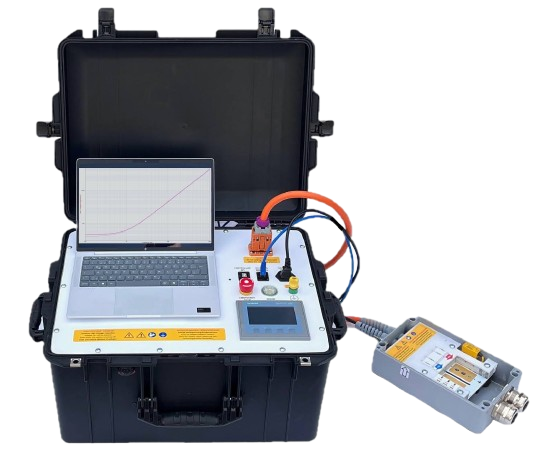
Electrochemical impedance spectroscopy (EIS), a frequency-based stimulus-response technique, provides in-depth insights into the internal behavior of high-energy systems and is therefore indispensable for early fault detection, degradation analysis, and condition monitoring in batteries, fuel cells, and similar systems.
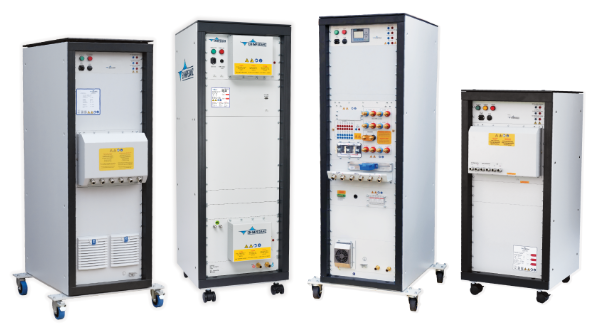
We are constantly developing new systems - often in response to customer inquiries and specific requests.
Please contact us and send us your requirements. Our development team will be happy to schedule an online meeting with you.